Showing posts with label copyleft. Show all posts

Tuesday, March 4, 2014

Lawrence Lessig Settles Fair Use Lawsuit Over Phoenix Music Snippets

Liberation Music Will Fix Its Copyright Policies and Pay Compensation

San Francisco - Prof. Lawrence Lessig has settled his lawsuit against an Australian record label over the use of clips of a popular song by the band Phoenix in a lecture that was later posted online. Liberation Music, which represents Phoenix in New Zealand, claimed the clips infringed copyright, demanded YouTube take down the lecture, and then threatened to sue Lessig. Represented by the Electronic Frontier Foundation (EFF) and Jones Day, Lessig fought back, asserting his fair use rights in court.
"Too often, copyright is used as an excuse to silence legitimate speech," said Lessig, who serves as the Roy L. Furman Professor of Law and Leadership at Harvard Law School and director of the Edmond J. Safra Center for Ethics at Harvard University. "I've been fighting against that kind of abuse for many years, and I knew I had to stand up for fair use here as well. Hopefully this lawsuit and this settlement will send a message to copyright owners to adopt fair takedown practices—or face the consequences."
The settlement requires Liberation Music to pay Lessig for the harm it caused. The amount is confidential under the terms of the settlement, but it will be dedicated to supporting EFF's work on open access, a cause of special importance to Lessig's friend, Aaron Swartz, a technologist and activist who took his own life in early 2013. The parties also worked together to improve Liberation Music's methodology for compliance with the requirements of the DMCA in the United States. Going forward, Liberation Music will adopt new policies that respect fair use.
Neither party concedes the claims or defenses of the other. Liberation Music included this statement in the settlement agreement:
"Liberation Music is pleased to amicably resolve its dispute with Professor Lessig. Liberation Music agrees that Professor Lessig's use of the Phoenix song 'Lisztomania' was both fair use under US law and fair dealing under Australian law. Liberation Music will amend its copyright and YouTube policy to ensure that mistakes like this will not happen again. Liberation Music is committed to a new copyright policy that protects its valid copyright interests and respects fair use and dealing."
A co-founder of the nonprofit Creative Commons and author of numerous books on law and technology, Lessig has played a pivotal role in shaping the debate about copyright in the digital age. In June 2010, Lessig delivered a lecture titled "Open" at a Creative Commons conference in South Korea that included several short clips of amateur dance videos set to the song "Lisztomania" by the French band Phoenix. The lecture, which was later uploaded to YouTube, used the clips to highlight emerging styles of cultural communication on the Internet.
As a condition of the settlement, Liberation Music submitted a declaration explaining its takedown procedures. Liberation Music had allowed a single employee to use YouTube's automatic Content ID system to initiate the takedown process and then, when Lessig challenged the takedown, threaten a lawsuit. The employee, who did not have a legal background, did not actually review Lessig's video before issuing a threat of a lawsuit.
Liberation Music's new policy will still rely on YouTube's system, but it will ensure that no takedown notice is issued without human review, including fair use considerations. Liberation Music will also limit its copyright enforcement to jurisdictions where it actually owns or administers the copyright.
"This is the policy Liberation Music should have had from the beginning," EFF Intellectual Property Director Corynne McSherry said. "Too many content owners are issuing takedowns and manipulating content filters without respect for the rights of users. This fight may be over, but the battle continues until every content owner embraces best practices that protect fair use."

For more on this case:
https://www.eff.org/cases/lawrence-lessig-v-liberation-music

About Prof. Lessig:
Lawrence Lessig is the Roy L. Furman Professor of Law and Leadership at Harvard Law School, director of the Edmond J. Safra Center for Ethics at Harvard University and founder of Rootstrikers, a network of activists leading the fight against government corruption. He has authored numerous books, including The USA is Lesterland, Republic, Lost: How Money Corrupts Our Congress—and a Plan to Stop It, Code and Other Laws of Cyberspace, Free Culture, and Remix.

Contact:
Corynne McSherry
   Intellectual Property Director
   Electronic Frontier Foundation
   corynne@eff.org

Thursday, February 20, 2014

Less may be more: Copyleft, -right and the case law on APIs on both sides of the Atlantic

Abstract: Like any relatively young areas of law, copyright on software is surrounded by some legal uncertainty. Even moreso in the context of copyleft open source licenses, since these licenses in some respects aim for goals that are the opposite of 'regular' software copyright law. This article provides an analysis of the inheritance effect of the GPL-family of copyleft software licenses (the GPL, LGPL and the AGPL) from a mostly copyright perspective as well as an analysis of the extent to which the SAS/WPL case affects this family of copyleft software licenses. In this article the extent to which the GPL and AGPL inheritance clauses have a wider effect than those of the LGPL is questioned, while both the SAS/WPL jurisprudence and the US Google case seem to affirm the LGPL's “dynamic linking” criterium.

A paper by Walter van Holst published in IFOSS Law Review.

Table of content
  • Introduction
  • Legal framework as provided by the GPL family
    • Roles of the GPL family of licenses
    • Bare licenses based on copyright law
  • Analysis and application to libraries
    • Linking mechanisms
    • Transformation and derivation in case law
  • Conclusion

_________________________

License and attribution
This paper was published in the International Free and Open Source Software Law Review, Volume 5, Issue 1 (MARCH 2013). It originally appeared online at http://www.ifosslr.org.
This article should be cited as follows:
Holst, Walter van  (2013) 'Less may be more: Copyleft, -right and the case law on APIs on both sides of the Atlantic', International Free and Open Source Software Law Review, 5(1), pp 5 – 14
DOI: 10.5033/ifosslr.v5i1.72

Copyright © 2013 Walter van Holst.
This article is licensed under a Creative Commons NL (Netherlands) 2.0 licence, no derivative works, attribution, CC-BY-ND available at http://creativecommons.org/licenses/by-nd/2.0/uk/.
As a special exception, the author expressly permits faithful translations of the entire document into any language, provided that the resulting translation (which may include an attribution to the translator) is shared alike. This paragraph is part of the paper, and must be included when copying or translating the paper.

Monday, February 17, 2014

Copyright 2.0: Interests and Rules

source of the pic
Let us think for a moment about the set of rules which would appear to be appropriate to meet the demands of creators operating along the short route.

1. The Interests.

In the market based model it was essential for creators and even more so for businesses to control and restrict access to works, as the monopoly granted by expansive exclusive rights enabled them to charge whatever price the market would bear.
However, this would not appear to be the goal of creators currently operating along the short route. The great majority of them, be it 9 out of 10 or 95 out of 100, do not make a living out of “sales” of “copies” of their works; they earn their livelihood in another activity or business and devote a portion – often a  very large portion – of their spare time to creating, in a way which may give them a bit of extra income, professional credit and recognition which may have positive spill - over effects in their main line or just fun (or a combination of the three).
Even when the creators operating along the short route are professionally engaged in the creation of works, which is usually not the case, their business model usually is based on income flows different from the sale of copies as such. It would appear that there is a shift whereby even singers and songwriters increasingly rely on performances, tours, endorsements, merchandising and their likes rather than sales of albums and tracks.
This is the business model which the Grateful Dead pioneered, possibly taking a clue from open source software and IBM, and is currently expanding to an increasing number of business. So that the eminent economist Paul Krugmann a few years ago made the case that the demise of reliance on income based on “hard” copies was being generalized and, making his case, quipped that in the long run we will all be the Grateful Dead.
What is important for creators engaged along the short route is, it would appear, that their work can be disseminated as widely as possible, on two conditions: first, that the work is correctly attributed to them, and second, that
the creators may, if they so choose, reserve the right to prevent third parties
to make a commercial profit out of their work unless this is agreed to by the creator herself.

2. The Rules.

If this is so, then what may currently be needed is a new kind of copyright, which we may, if you wish, label Copyright 2.0. I submit that the new system would have four basic features. Old copyright, or Copyright 1.0, would still be available; but it would have to be claimed for by the creator at the onset, e.g. by inserting the old copyright notice, ©, as the US did in the past, before accessing the Berne Convention.
If no notice was given, Copyright 2.0 would apply; and this would give creators just one right, the right to attribution.
The notice could also be added after creation, but then it would only have the effect of giving exclusivity against specified non authorized uses (in particular:
subsequent commercial uses).
The Copyright 1.0 protection given by the original notice could be withdrawn, and may be it should be deemed withdrawn after a specified period of time (e.g. the 14 years of the original copyright protection), unless an extension period (of another 14 years) is specifically requested.
What is the purpose of the exercise I just sketched out? Well, I confess that, even a couple of years after airing this proposal, I am not so totally sure after all that the four features I just described are really what is appropriate for the needs of our societies and their creators.
The point I am making, however, is that thinking along these lines at least allows us to conceptualize how the different sets of rules correspond to the specific needs of the creators who create works along the long and short route. We assumed that Copyright 1.0 should survive; and we may anticipate that this is likely to be resorted to by creators (and businesses) choosing to operate along the long route. Indeed, the ultimate goal is not to displace old copyright, which seems to be alive and well in many situations, but to add to the menu a second possibility, Copyright 2.0, which should be better tailored to the characters of production and distribution of works prevailing in the current digital environment.
This line of reasoning might also help us in asking the next question. Which set of rules would then operate in each given situation? Well, in some way I already replied to this question: creators should opt-in for Copyright 1.0 at the time of the original release of their work; otherwise the new and more flexible Copyright 2.0 would operate as a default set of provisions.
This is why in the past I characterized this approach as “Lessig by default” or, in a less personalized way, “Creative Commons by default”. The idea behind the approach is that the very successful uptake of Creative Commons licenses and other copyleft licenses by creators operating along the short route shows that out there, in the digital prairies and wilderness, there is a very large number indeed of crea tors who prefer to reserve only some rights rather than all rights; and that the time has come for legal systems to recognize this fact of life by creating a regime in which downstream freedom is the rule and a system under which creators may have the option to reserve some rights or, if they like, all the old Copyright 1.0 rights, only if they wish and say so, giving appropriate notice.

- - - - - - - - - - - -

This is an excerpt of "Consume and Share: Making Copyright Fit for the Digital Agenda" by Prof. Marco Ricolfi (2011); under a CC by license.
See the entire paper (with all the footnotes and references) here.

Sunday, January 19, 2014

What is Copyleft?

Copyleft is a general method for making a program (or other work) free, and requiring all modified and extended versions of the program to be free as well.
The simplest way to make a program free software is to put it in the public domain, uncopyrighted. This allows people to share the program and their improvements, if they are so minded. But it also allows uncooperative people to convert the program into proprietary software. They can make changes, many or few, and distribute the result as a proprietary product. People who receive the program in that modified form do not have the freedom that the original author gave them; the middleman has stripped it away.
In the GNU project, our aim is to give all users the freedom to redistribute and change GNU software. If middlemen could strip off the freedom, we might have many users, but those users would not have freedom. So instead of putting GNU software in the public domain, we “copyleft” it. Copyleft says that anyone who redistributes the software, with or without changes, must pass along the freedom to further copy and change it. Copyleft guarantees that every user has freedom.
Copyleft also provides an incentive for other programmers to add to free software. Important free programs such as the GNU C++ compiler exist only because of this.
Copyleft also helps programmers who want to contribute improvements to free software get permission to do so. These programmers often work for companies or universities that would do almost anything to get more money. A programmer may want to contribute her changes to the community, but her employer may want to turn the changes into a proprietary software product.
When we explain to the employer that it is illegal to distribute the improved version except as free software, the employer usually decides to release it as free software rather than throw it away.
To copyleft a program, we first state that it is copyrighted; then we add distribution terms, which are a legal instrument that gives everyone the rights to use, modify, and redistribute the program's code, or any program derived from it, but only if the distribution terms are unchanged. Thus, the code and the freedoms become legally inseparable.
Proprietary software developers use copyright to take away the users' freedom; we use copyright to guarantee their freedom. That's why we reverse the name, changing “copyright” into “copyleft.”
Copyleft is a way of using of the copyright on the program. It doesn't mean abandoning the copyright; in fact, doing so would make copyleft impossible. The “left” in “copyleft” is not a reference to the verb “to leave”—only to the direction which is the inverse of “right”.
Copyleft is a general concept, and you can't use a general concept directly; you can only use a specific implementation of the concept. In the GNU Project, the specific distribution terms that we use for most software are contained in the GNU General Public License (available in HTML, text, and Texinfo format). The GNU General Public License is often called the GNU GPL for short. There is also a Frequently Asked Questions page about the GNU GPL. You can also read about why the FSF gets copyright assignments from contributors.
An alternate form of copyleft, the GNU Affero General Public License (AGPL) (available in HTML, text, and Texinfo format), is designed for programs that are likely to be used on servers. It ensures that modified versions used to implement services available to the public are released as source code to the public.
A compromise form of copyleft, the GNU Lesser General Public License (LGPL) (available in HTML, text, and Texinfo format), applies to a few (but not all) GNU libraries. To learn more about properly using the LGPL, please read the article Why you shouldn't use the Lesser GPL for your next library.
The GNU Free Documentation License (FDL) (available in HTML, text and Texinfo) is a form of copyleft intended for use on a manual, textbook or other document to assure everyone the effective freedom to copy and redistribute it, with or without modifications, either commercially or noncommercially.
The appropriate license is included in many manuals and in each GNU source code distribution.
All these licenses are designed so that you can easily apply them to your own works, assuming you are the copyright holder. You don't have to modify the license to do this, just include a copy of the license in the work, and add notices in the source files that refer properly to the license.
Using the same distribution terms for many different programs makes it easy to copy code between various different programs. When they all have the same distribution terms, there is no problem. The Lesser GPL, version 2, includes a provision that lets you alter the distribution terms to the ordinary GPL, so that you can copy code into another program covered by the GPL. Version 3 of the Lesser GPL is built as an exception added to GPL version 3, making the compatibility automatic.
If you would like to copyleft your program with the GNU GPL or the GNU LGPL, please see the license instructions page for advice. Please note that you must use the entire text of the license you choose. Each is an integral whole, and partial copies are not permitted.
If you would like to copyleft your manual with the GNU FDL, please see the instructions at the end of the FDL text, and the GFDL instructions page. Again, partial copies are not permitted.
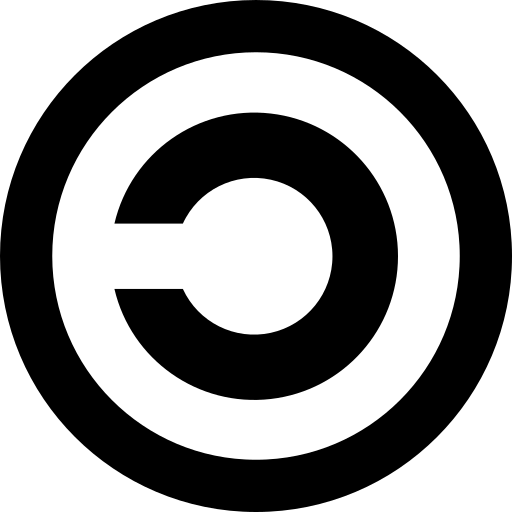
It is a legal mistake to use a backwards C in a circle instead of a copyright symbol. Copyleft is based legally on copyright, so the work should have a copyright notice. A copyright notice requires either the copyright symbol (a C in a circle) or the word “Copyright”.
A backwards C in a circle has no special legal significance, so it doesn't make a copyright notice. It may be amusing in book covers, posters, and such, but be careful how you represent it in a web page!
__________________________

Original source: www.gnu.org/copyleft/copyleft.en.html
Copyright © 1996, 1997, 1998, 1999, 2000, 2001, 2002, 2003, 2004, 2005, 2006, 2007, 2008, 2009 Free Software Foundation, Inc.
This page is licensed under a Creative Commons Attribution-NoDerivs 3.0 United States License.
 

Wednesday, January 15, 2014

Copyright and Open Access 2014


This week has been proclaimed Copyright week by the EFF (Electronic Frontier Foundation) and today, Wednesday Jan 15, is Open Access Day 2014. It is almost exactly 1 year ago that Aaron Swartz (http://en.wikipedia.org/wiki/Aaron_Swartz) died in the middle of his struggle for open knowledge and it would be a good thing to make this week and in particular Open Access Day, a recurring event in his honor.
The open access movement has gained momentum in the past year and too much has happened to list every thing. Instead lets focus on a few key events and developments.
In 2013 the White House has issued a directive stating that all publicly funded research should be made publicly available in repositories. The reaction of the scientific publishers has been to allow this, but under the condition that there is an embargo time of 6 months or 1 year. Many have thought that this would be a necessary transition measure, but recently they have been proven very wrong in this assumption because a powerful lobby of publishers is now even demanding for embargo times of up to 3 years!
In our opinion any embargo time for making publications open access is the wrong thing to do: it is not in the interest of science, not in the interest of society, it seems designed only to protect the rights of the publishers in order to maintain their profits. Any paper, especially in the Science, Technology, Engineering and Maths disciplines, refers to work done at least 1-2 years previously. Combined with the inherent fast pace of science, any embargo period – especially prolonged embargo periods – will make sharing of the information less useful and less efficient by prolonging this time span further. Instead we should strive for Zero-embargo publication and push for SHORTER review and handling times, which can sometimes be as long as 6 months!
We should remember Open Access is not only about having information freely available to view. People should also be able to reuse the information freely with no restrictions other than the requirement to attribute. Instead of traditional copyright rules and property rights open access publishers increasingly use a set of licenses developed by Creative Commons. These licenses provide a basic choice of rules for the usage of the work, in combination with the stringent demand for attribution of the work to the original author(s). In this way copyright remains (forever) with the author while allowing for unrestricted (or in other cases somewhat restricted) use of the information.
The original copyright rules that evolved around 1700 (Statute of Anne) were developed to protect the right of the owner of a work for a limited time (2x 14 years) in exchange for having the work in the public domain after this time period. So in a sense these rules were aimed at allowing to share the information. Because information did not travel that fast in those days, this ‘embargo period’ was then considered enough. When through technical advancements information started to move more quickly the copyright period was gradually extended to 70 years and more (Copyright, Designs and Patents Act 1988). However, in the process the copyright ownership had shifted from individual copyright to corporate copyright owned by publishing businesses. The ultimate goal of the copyright laws no longer reflected the ultimate goal of sharing information after a short period of time, but instead have a new role of defending business interests for as long as possible.
Today, thanks to the invention of the Internet, we see the making of a sharing economy. Many sharing communities exist already, but the community of sharing scientists is slow in coming. Although the internet was developed by scientists to exchange information the public has been much more quick in seeing and using the possibilities for sharing ideas, goods and information. Sharing of scientific information is still in its infancy, not in the least because of the ongoing efforts of traditional publishers to shield information for as long as this is profitable, but open science communities have started to form all over the world. This can be seen by the rapid growth of the Open Knowledge Foundation, with over 40 local open knowledge communities worldwide, many more than only two years ago. And it is also illustrated by the steady growth of older open access publishers like PLoS, BioMedCentral, as well as the very successful introductions of new journals like eLife and PeerJ.
Political and scientific support is also growing. The next European research program Horizon2020 aims at 100 % open access for all publicly funded research. And a scientific society like the Max Planck society has just organized its tenth anniversary Berlin conference on open access in Berlin.
However not only political and scientific support is important. We want to have citizens, students, entrepreneurs, and everyone else who needs (specific) information to push for global open access to all academic literature. And we need your help to do this.
  • You can contact the Open Knowledge Foundation by registering on the website
  • You can subscribe to any of the mailing lists of the OKF for instance the open access list and take part in discussions
  • You can share your stories on difficulties or success with accessing information on the website WhoNeedsAccess
  • You can download the OpenAccessButton and start registering where you hit paywalls when trying to access information
Tom Olijhoek and Michelle Brooks from the Open Access Working Group/ OKF
____________________________

Original source published here under a CC by 3.0 license (January 15, 2014).

Sunday, January 12, 2014

On-line education is using a flawed Creative Commons license

http://en.wikipedia.org/wiki/File:NicoBZH_-_Richard_Stallman_%28by-sa%29_%2810%29.jpg
Prominent universities are using a nonfree license for their digital educational works. That is bad already, but even worse, the license they are using has a serious inherent problem. When a work is made for doing a practical job, the users must have control over the job, so they need to have control over the work. This applies to software, and to educational works too. For the users to have this control, they need certain freedoms (see gnu.org), and we say the work is "free" (or "libre", to emphasize we are not talking about price). For works that might be useful in commercial contexts, the requisite freedom includes commercial use, redistribution and modification.
Creative Commons publishes six principal licenses. Two are free/libre licenses: the Sharealike license CC-BY-SA is a free/libre license with copyleft, and the Attribution license (CC-BY) is a free/libre license without copyleft. The other four are nonfree, either because they don't allow modification (ND, Noderivs) or because they don't allow commercial use (NC, Nocommercial).
In my view, nonfree licenses that permit sharing are ok for works of art/entertainment, or that present some party's viewpoint (such as this article itself). Those works aren't meant for doing a practical job, so the argument about the users' control does not apply. Thus, I do not object if they are published with the CC-BY-NC-ND license, which allows only noncommercial redistribution of exact copies.
Use of this license for a work does not mean that you can't possibly publish that work commercially or with modifications. The license doesn't give permission for that, but you could ask the copyright holder for permission, perhaps offering a quid pro quo, and you might get it. It isn't automatic, but it isn't impossible.
However, two of the nonfree CC licenses lead to the creation of works that can't in practice be published commercially, because there is no feasible way to ask for permission. These are CC-BY-NC and CC-BY-NC-SA, the two CC licenses that permit modification but not commercial use.
The problem arises because, with the Internet, people can easily (and lawfully) pile one noncommercial modification on another. Over decades this will result in works with contributions from hundreds or even thousands of people.
What happens if you would like to use one of those works commercially? How could you get permission? You'd have to ask all the substantial copyright holders. Some of them might have contributed years before and be impossible to find. Some might have contributed decades before, and might well be dead, but their copyrights won't have died with them. You'd have to find and ask their heirs, supposing it is possible to identify those. In general, it will be impossible to clear copyright on the works that these licenses invite people to make.
This is a form of the well-known "orphan works" problem, except exponentially worse; when combining works that had many contributors, the resulting work can be orphaned many times over before it is born.
To eliminate this problem would require a mechanism that involves asking someone for permission (otherwise the NC condition turns into a nullity), but doesn't require asking all the contributors for permission. It is easy to imagine such mechanisms; the hard part is to convince the community that one such mechanisms is fair and reach a consensus to accept it.
I hope that can be done, but the CC-BY-NC and CC-BY-NC-SA licenses, as they are today, should be avoided.
Unfortunately, one of them is used quite a lot. CC-BY-NC-SA, which allows noncommercial publication of modified versions under the same license, has become the fashion for online educational works. MIT's "Open Courseware" got it stared, and many other schools followed MIT down the wrong path. Whereas in software "open source" means "probably free, but I don't dare talk about it so you'll have to check for yourself," in many online education projects "open" means "nonfree for sure".
Even if the problem with CC-BY-NC-SA and CC-BY-NC is fixed, they still won't be the right way to release educational works meant for doing practical jobs. The users of these works, teachers and students, must have control over the works, and that requires making them free. I urge Creative Commons to state that works meant for practical jobs, including educational resources and reference works as well as software, should be released under free/libre licenses only.
Educators, and all those who wish to contribute to on-line educational works: please do not to let your work be made non-free. Offer your assistance and text to educational works that carry free/libre licenses, preferably copyleft licenses so that all versions of the work must respect teachers' and students' freedom. Then invite educational activities to use and redistribute these works on that freedom-respecting basis, if they will. Together we can make education a domain of freedom.
________________________________

an article by Richard M. Stallman (original source published here in September 2012; license: Creative Commons Attribution Noderivs 3.0)
see French Translation